Experiment #002
Experiment Overview
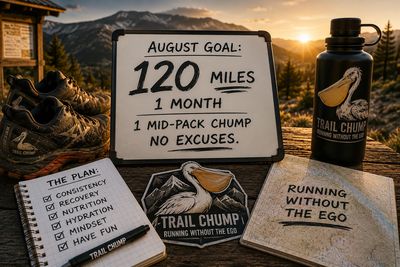
For years I’ve wondered what would happen if I stopped waiting for the perfect training plan, the perfect schedule, or the perfect motivation. This experiment is my attempt to answer that question. Over the next 31 days, I’ll run 120 miles while balancing a full-time career, family life, and the everyday responsibilities most runners face. Every mile, setback, adjustment, and lesson will be documented in real time. Whether I succeed or fail, the goal is the same: discover what actually works for the average runner and share those findings with anyone chasing a goal of their own.
Question
Can an average 45-year-old husband, father, full-time retail manager, and aspiring ultrarunner successfully run 120 miles in one month without sacrificing family, health, or work? More importantly, can consistency outperform perfection when life refuses to cooperate?
Hypothesis
I believe 120 miles is achievable—not because I’m an elite runner, but because consistent effort beats occasional perfection. By prioritizing manageable daily runs, recovery, and honest accountability, I believe an ordinary runner can accomplish what many assume requires extraordinary circumstances.
Success Criteria
The experiment will be considered successful if I complete 120 running miles during the month of August while maintaining my responsibilities at work, staying present for my family, avoiding significant injury, and documenting the entire process with complete honesty. Success isn’t measured by pace—it’s measured by consistency and sustainability.
Failure Criteria
The experiment will be considered unsuccessful if I fail to reach 120 miles due to poor planning, inconsistent effort, or abandoning the process. However, legitimate setbacks such as illness, injury, or family emergencies will be documented as part of the experiment rather than treated as excuses. Even if the mileage goal isn’t reached, the experiment only truly fails if I stop learning from it.
Rules
To keep this experiment fair and transparent, every mile must be honestly earned and accurately recorded. No estimated mileage. No hidden missed days. Trail and road miles both count, as do stroller runs. Walking miles do not count toward the total. Every setback, adjustment, and unexpected lesson will be documented so readers can see the complete picture—not just the highlight reel.
Starting Data
Every experiment begins with a baseline. At the start of this challenge, I’m 45 years old, 6’3”, and weigh approximately 220 pounds. I work full-time as an Assistant Warehouse Manager while balancing family life and training for future ultramarathon goals. These starting conditions provide the context needed to understand the results and allow future experiments to be compared objectively.
Research Notes
This is where the real experiment lives. Throughout August, I’ll record daily observations, mileage, recovery, physical and mental challenges, unexpected discoveries, and adjustments to the plan. Nothing will be filtered or rewritten after the fact. These notes are intended to capture the reality of pursuing a difficult goal while living an ordinary life.
Weekly Dashboard
At the end of each week, I’ll summarize the experiment by reviewing total mileage, longest run, average sleep, body weight, energy levels, recovery, and the most important lessons learned. Looking at the experiment one week at a time makes it easier to identify patterns and adjust before small problems become major setbacks.
Final Lab Report
When the experiment concludes, all of the data, observations, and lessons will be brought together into one final report. I’ll evaluate whether the original question was answered, what surprised me most, what I’d change if I repeated the experiment, and whether I’d recommend this approach to other runners balancing careers, families, and ambitious goals. The goal isn’t simply to report the results—it’s to leave readers with practical insights they can immediately apply to their own running.
Trail Chump Takeaway
Every experiment ends with one simple question: “How does this help someone else?” Whether I succeed, fail, or land somewhere in between, the purpose of Trail Chump Labs is to turn personal experience into practical guidance for everyday runners. If this experiment helps even one person believe they’re capable of more than they imagined, then every mile was worth it.